

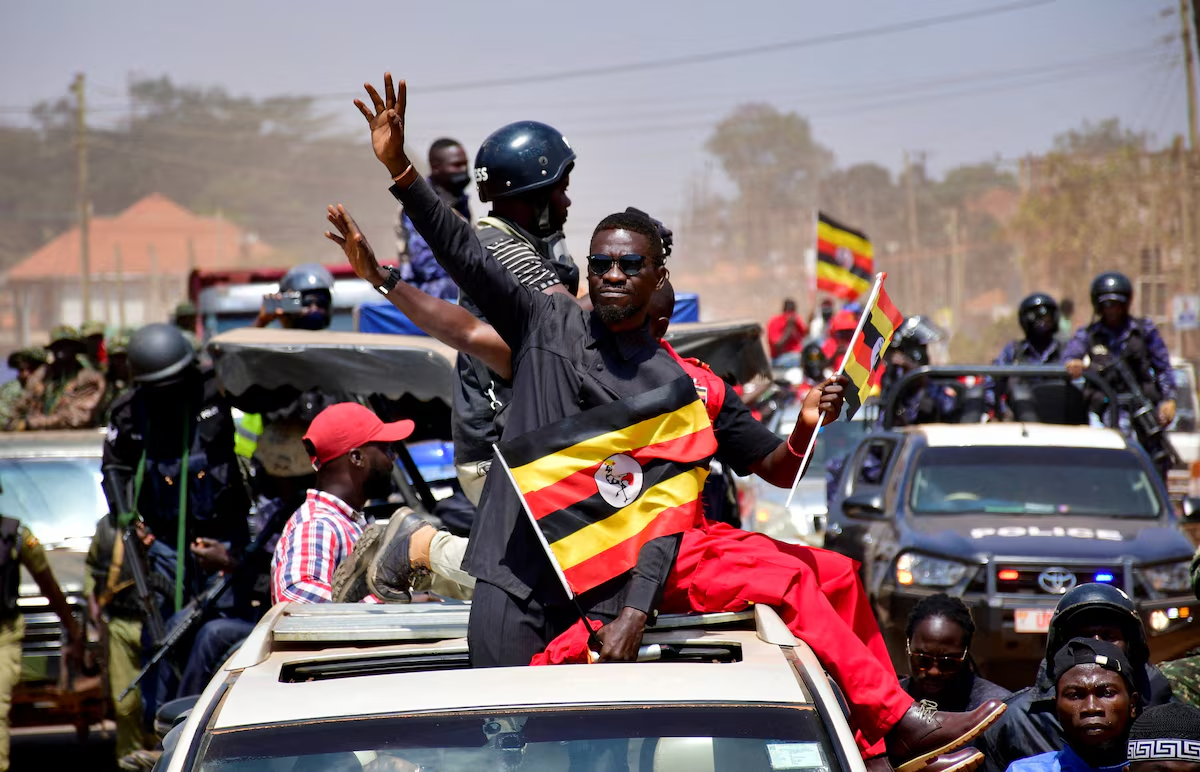
Uganda’s political climate grew increasingly tense on Saturday after leading opposition candidate Robert Kyagulanyi, popularly known as Bobi Wine, alleged that he and his team were violently assaulted by security forces while campaigning in the northern part of the country. The incident, reported by Wine through a series of posts on his official X account, comes just weeks ahead of Uganda’s scheduled presidential election on January 15.
Wine, the National Unity Platform (NUP) presidential candidate, has long been a central figure in Uganda’s opposition movement. The musician-turned-politician, whose rise to prominence transformed him into the face of youthful political activism in the country, is challenging 81-year-old President Yoweri Museveni for the second time. Museveni, who has ruled Uganda since 1986, is one of Africa’s longest-serving leaders. Wine finished second in the 2021 election, which was marred by allegations of voter intimidation, media restrictions, and heavy security deployment.
According to Wine, Saturday’s confrontation unfolded as he and his supporters approached a campaign venue in Gulu, the largest city in northern Uganda. He said his convoy was intercepted by what he described as “criminals in police and military uniform,” who allegedly began attacking members of his team with sticks and stones. In his posts, Wine claimed he was struck in the face with a stick while several of his aides and supporters suffered serious injuries that required hospitalisation.
“One of the thugs hit me with a stick on the face… several comrades are hospitalised,” he wrote in one post on X. “All this because Museveni is dead scared of the people.” He shared photos of injured members of his team, including an image of an aide with blood streaming down his head, alongside footage purportedly showing military and police personnel beating civilians with sticks.
The attack marks one of the most serious allegations of abuse against the opposition in the lead-up to the January election, further fuelling concerns over Uganda’s deteriorating political environment. Human rights organisations, regional observers, and foreign governments have repeatedly voiced concerns about the pattern of violence that tends to emerge during Ugandan election cycles, particularly against opposition figures.
In response to Wine’s claims, military spokesperson Chris Magezi rejected the characterisation of the security forces’ actions as brutality. Instead, he accused Wine and his supporters of flouting campaign regulations. Magezi alleged that the NUP team had staged an illegal procession and was campaigning beyond the officially permitted time frame, prompting security forces to intervene.
“Security forces are there to make sure everyone follows the law,” Magezi said, asserting that the actions taken by the military were aimed at upholding electoral and public order guidelines.
Attempts by Reuters to obtain a response from the national police were unsuccessful, as a spokesperson did not answer calls seeking clarification. Wine, however, insists that the security forces were the aggressors and that their actions were unprovoked. He also accused authorities of vandalising his campaign materials, including his public address system, which he claims was deliberately destroyed to silence his message.
The confrontation in Gulu is the latest in a series of clashes between Bobi Wine and Ugandan security agencies. Over the past several years, his rallies have been repeatedly dispersed, his supporters detained, and his movements restricted. In 2018, he was arrested and allegedly tortured by security forces — an incident that drew widespread international condemnation. Wine’s prominence and outspoken criticism of the Museveni administration have made him both a national icon for reform and a frequent target of state crackdowns.
The international community is now beginning to take notice of the rising political temperature ahead of the January poll. On Wednesday, U.N. High Commissioner for Human Rights Volker Türk expressed grave concern over what he described as an “intensifying crackdown” on Uganda’s opposition. In a statement, Türk said that at least 550 members of Wine’s National Unity Platform had been detained since the beginning of the year, with many allegedly facing harassment, intimidation, or excessive force at the hands of state security agencies.
Türk urged the Ugandan government to uphold its human rights obligations ahead of the election, stressing the importance of allowing opposition candidates to campaign freely and without fear. “The democratic process cannot flourish in an environment where violence, intimidation, and systematic targeting of opposition groups prevail,” he noted.
Analysts warn that rising tensions could undermine the credibility of the upcoming election, especially if violence escalates in the northern and central regions, where the opposition enjoys significant support. Wine’s campaign events often draw massive youthful crowds, reflecting widespread frustration with unemployment, corruption, and perceived lack of political freedom under the current administration.
The Museveni government maintains that it is committed to conducting a fair and peaceful election and continues to accuse the opposition of inciting unrest for political gain. However, opposition actors argue that such claims are part of a broader strategy to suppress dissent and tilt the electoral landscape in favour of the incumbent.
As the January 15 election draws closer, many Ugandans are bracing for a potentially turbulent campaign season. Civil society groups have called on security forces to exercise restraint and on political actors to avoid inflammatory rhetoric. Meanwhile, the NUP says it will continue with its campaign schedule despite the threats and alleged intimidation.
For Bobi Wine and his supporters, the events in Gulu are yet another reminder of the uphill battle they face in a political environment where state machinery is often viewed as heavily skewed in favour of the ruling party. Wine, however, remains defiant, insisting that no level of violence or fear will stop his push for what he calls “a new Uganda.”
The coming weeks will determine whether Uganda can conduct an election free from violence, intimidation, and suppression, or whether the rising tensions will spill over into broader unrest. For now, the country’s political future remains uncertain as both the government and opposition brace for what may be one of Uganda’s most consequential elections in decades.
Follow Africa Live News
Facebook: https://facebook.com/africalivenews
Instagram: https://instagram.com/africalivenews
X (Twitter): https://x.com/africalivenews2